Medical device classification: what is it and why is it used?
A device’s class affects conformity assessment and some obligations after sales begin. We explain how to determine it under the MDR and why a similar appearance does not mean that two products belong to the same class.


Key Takeaways
- The MDR divides devices into classes I, IIa, IIb and III based on their intended purpose and inherent risks.
- Classification follows Article 51 and the rules in Annex VIII MDR.
- Is, Im and Ir identify specific characteristics of class I devices; they are not additional classes alongside I, IIa, IIb and III.
- The manufacturer documents the class and the justification for the rules applied.
- Where several rules or sub-rules apply, use those that lead to the highest class.
- The current general guidance is MDCG 2021-24 rev.1, published in April 2026.
In this article
- What is classification under the MDR?
- Qualification comes first: does the product fall under the MDR?
- How should classes I, IIa, IIb and III be understood?
- What do Is, Im and Ir mean?
- Which characteristics determine the class?
- Duration of use and invasiveness
- Function, energy and specific rules
- How is medical device software classified?
- What changes after sales begin?
- Who is responsible for classification?
- Classification rules and risk analysis
- What does this mean in practice?
- Hypothetical example: extending a dressing's intended purpose
- Which mistakes should a review avoid?
- How can Neximed support the team?
- What should be checked before approving classification?
- Sources & references
- Frequently Asked Questions (FAQ)
What is classification under the MDR?
Classification assigns a medical device to class I, IIa, IIb or III under the rules of Regulation (EU) 2017/745. Article 51 requires the intended purpose and inherent risks to be taken into account. Annex VIII sets out the detailed rules. 1
The class determines, among other things, how conformity must be demonstrated. For many devices, this requires a notified body. It also affects the frequency of certain reports and specific obligations relating to clinical data. 2
Classification does not assess the quality of an individual unit. A class I device must still meet the applicable safety and performance requirements. Class III is a regulatory category; it does not mean that a properly assessed device is defective.
Qualification comes first: does the product fall under the MDR?
Before selecting a rule, establish which regulatory framework applies. Qualification determines whether the product is a medical device or another product covered by the MDR. Classification then determines its class. 1 2
Start with the intended purpose. The manufacturer's statements in the labeling, instructions for use, promotional materials and clinical evaluation all matter. Establish the medical purpose, intended users, patient population and how the product is used. 1
For example, a system used solely to schedule appointments calls for a different assessment from software that processes patient data to support treatment decisions. The word "medical" in a trade name does not define the function. MDCG 2019-11 rev.1, published in June 2025, provides guidance for software. 3
In vitro diagnostic medical devices fall under the IVDR and have separate rules. That framework uses classes A, B, C and D. These must not be carried over into MDR classification. MDCG 2020-16 rev.5, published in September 2026, explains the IVDR rules. 8 4
How should classes I, IIa, IIb and III be understood?
The class affects the scope of conformity assessment and the evidence required. It is assigned by applying the rules to the particular device. Describing a product as "simple" or "complex" is not enough to select a class. 1 2
- Class I: for devices without specific characteristics requiring notified body involvement, the manufacturer performs conformity assessment without a notified body.
- Class IIa: requires a notified body in the appropriate conformity assessment procedure.
- Class IIb: also requires a notified body; the scope of assessment depends, among other things, on whether the device is implantable.
- Class III: follows the procedures provided for this class, with specific requirements for assessing documentation and clinical evidence. 1 2
This is an outline of the routes for standard devices. Custom-made devices and investigational devices have their own rules, which cannot be inferred from the class alone.
What do Is, Im and Ir mean?
These designations describe class I devices:
- Is: devices placed on the market in sterile condition,
- Im: devices with a measuring function,
- Ir: reusable surgical instruments.
For these devices, Article 52(7) provides for notified body involvement limited to the relevant aspects: sterility, metrological requirements or reuse. For Ir, this includes cleaning, disinfection, sterilization and the related instructions. 1 5
"Reusable" does not automatically mean Ir. The device must meet the definition of a reusable surgical instrument, and the classification rules must be applied correctly. 2
Which characteristics determine the class?
Annex VIII contains 22 rules. Their application depends on the device's characteristics and intended purpose. The assessment considers duration of use, invasiveness, the site of contact with the body, whether the device is active and its specific functions. 1 2
Duration of use and invasiveness
The MDR distinguishes transient, short-term and long-term use. In general, these mean continuous use for less than 60 minutes, between 60 minutes and 30 days, and more than 30 days, respectively. The detailed provisions for calculating continuous use must also be considered, including applicable cases of immediate replacement with the same type of device. 1 2
It also matters whether the device penetrates the body, by which route and whether it remains in the body after a procedure. The definitions of invasive, surgically invasive and implantable devices have specific wording. A general description such as "patient contact" is not sufficient to apply them.
Function, energy and specific rules
For active devices, relevant factors include the type of energy delivered and the possible effects of its use. Separate rules cover, for example, contraception, disinfection of certain devices and products incorporating certain substances. 1 2
Continue the assessment after finding the first applicable general rule. A specific rule may also apply and lead to a different result. Where several rules or sub-rules apply, use those that result in the highest class. 1
How is medical device software classified?
Rule 11 provides for class IIa for software that supplies information used to make diagnostic or therapeutic decisions. If the impact of those decisions may cause serious deterioration in health or a surgical intervention, class IIb may apply. If it may cause death or irreversible deterioration in health, the rule specifies class III. 1 2
The rule also covers monitoring physiological processes. It distinguishes monitoring vital physiological parameters where the nature of variations could result in immediate danger to the patient. All other software covered by the final sentence of Rule 11 is classified as class I. 1
The assessment needs more detail than "the app advises a doctor." Describe the information it provides and its significance for the decision. Check the other rules too, including the provisions for software that drives a device or influences its use. 1 3
What changes after sales begin?
For class I devices, the manufacturer prepares a post-market surveillance report under Article 85 MDR. For classes IIa, IIb and III, it prepares a periodic safety update report (PSUR) under Article 86. The PSUR must be updated at least every two years for class IIa and at least annually for classes IIb and III. 1 2
Classification also affects certain clinical evaluation and traceability obligations. Requirements associated with implantation and other device characteristics must be checked separately. The class alone does not describe every applicable obligation.
For a device using transitional provisions, do not automatically apply the entire scheme above. Guidance for legacy devices distinguishes the classification used to determine the end of the transitional period from the classification relevant to certain ongoing obligations. 6
Who is responsible for classification?
The manufacturer determines the class and includes the justification for the rules applied in the technical documentation. A notified body assesses this element when involved in the relevant procedure. The MDR provides for the competent authority to resolve a dispute between the manufacturer and notified body over the application of Annex VIII. 1
The justification should allow the decision to be reconstructed. It is useful to record the device description and intended purpose, the characteristics relevant to classification and the assessment of applicable rules. A date and approval can be added under the company's document control procedures. The MDR does not prescribe a single form.
Classification rules and risk analysis
The class follows from applying the regulatory rules. Risk analysis identifies hazards associated with the particular device and assesses the controls. Both activities should use a consistent product description, but the outcome of a risk analysis does not allow the class specified by a rule to be lowered at will. 1 2
Similarly, a European Medical Device Nomenclature (EMDN) code describes the type of device when registering it in EUDAMED. It does not replace risk classification under the MDR. 7
What does this mean in practice?
Review classification before setting the budget and schedule for conformity assessment. The recommended sequence is:
Reviewing device classification
- 01Qualify the product
Describe the product and confirm its regulatory qualification.
- 02Agree the intended purpose
Align the intended purpose with the documentation and commercial claims.
- 03Gather device characteristics
Collect the characteristics needed to apply the rules.
- 04Assess applicable rules
Analyze all relevant rules and sub-rules.
- 05Document the decision
Record the class, justification and effect on the conformity assessment procedure.
- 06Define review triggers
Determine which changes will trigger a new review.
Hypothetical example: extending a dressing's intended purpose
Practical example
- Situation
A manufacturer offers a non-sterile dressing intended solely as a mechanical barrier for injured skin. Assuming no other characteristics affect the assessment, Rule 4 provides for class I for that intended purpose. [1] [2]
- Problem
The commercial team proposes extending the claims to wounds that have breached the dermis and can heal only by secondary intent. For that intended purpose, Rule 4 provides for class IIb.
- Approach
Before changing the materials, the manufacturer should reassess classification and the evidence required.
- Takeaway
An identical physical construction does not establish an identical class when the intended purpose differs.
Which mistakes should a review avoid?
Copying a competitor's class provides no justification for your own device. The other product may have a different intended purpose, duration of use or operating principle. Carrying an MDD classification over without assessing the MDR creates a similar problem.
Check whether the rules were assessed for all claimed intended purposes and whether a change to the instructions for use was reflected in the classification document. Resolve uncertainties before selecting a procedure, because the outcome determines the work plan and notified body involvement.
How can Neximed support the team?
Classification requires a manufacturer decision based on the MDR and an appropriate device description. When organizing work following a change in classification, the Training module can help maintain training records and evaluate training effectiveness. If a review identifies a systemic problem, CAPA allows the team to plan actions and assess their effectiveness.
Neximed does not replace the classification justification or a competent authority's decision. A discussion of the process can help define how to manage the resulting tasks.
Organize tasks after a classification review
Discuss how to manage training and CAPA actions resulting from the review.
What should be checked before approving classification?
Checks before approving classification
- Has the product’s qualification been justified?
- Is the intended purpose consistent across documentation and commercial materials?
- Have the duration of use and type of contact with the body been assessed?
- Have the relevant specific rules been checked?
- Have all claimed intended purposes been assessed?
- Where several rules apply, has the result leading to the highest class been used?
- Does the documentation contain the decision’s justification?
- Has a conformity assessment procedure matching the result been selected?
Verified on 15 October 2026. Educational material on classification in the EU. The example is hypothetical and does not determine the class of a particular product.
Sources & references
- 01
- 02
- 03
- 04
- 05
- 06
- 07
- 08
This article is for information only and does not replace an individual regulatory or legal analysis. Always check the current text of the regulations, the relevant guidance and the specifics of your device.
Frequently Asked Questions (FAQ)
Does class I mean that clinical evaluation is not required?
Is every reusable device an Ir device?
Can a manufacturer choose a lower class after reducing risk?
Are all medical apps class IIa?
Does an MDD class always remain correct under the MDR?
The NexiMed team working on quality management systems and regulatory compliance for medical device manufacturers.
See also
 Quality management
Transitional periods: how does the move from MDD to MDR work?
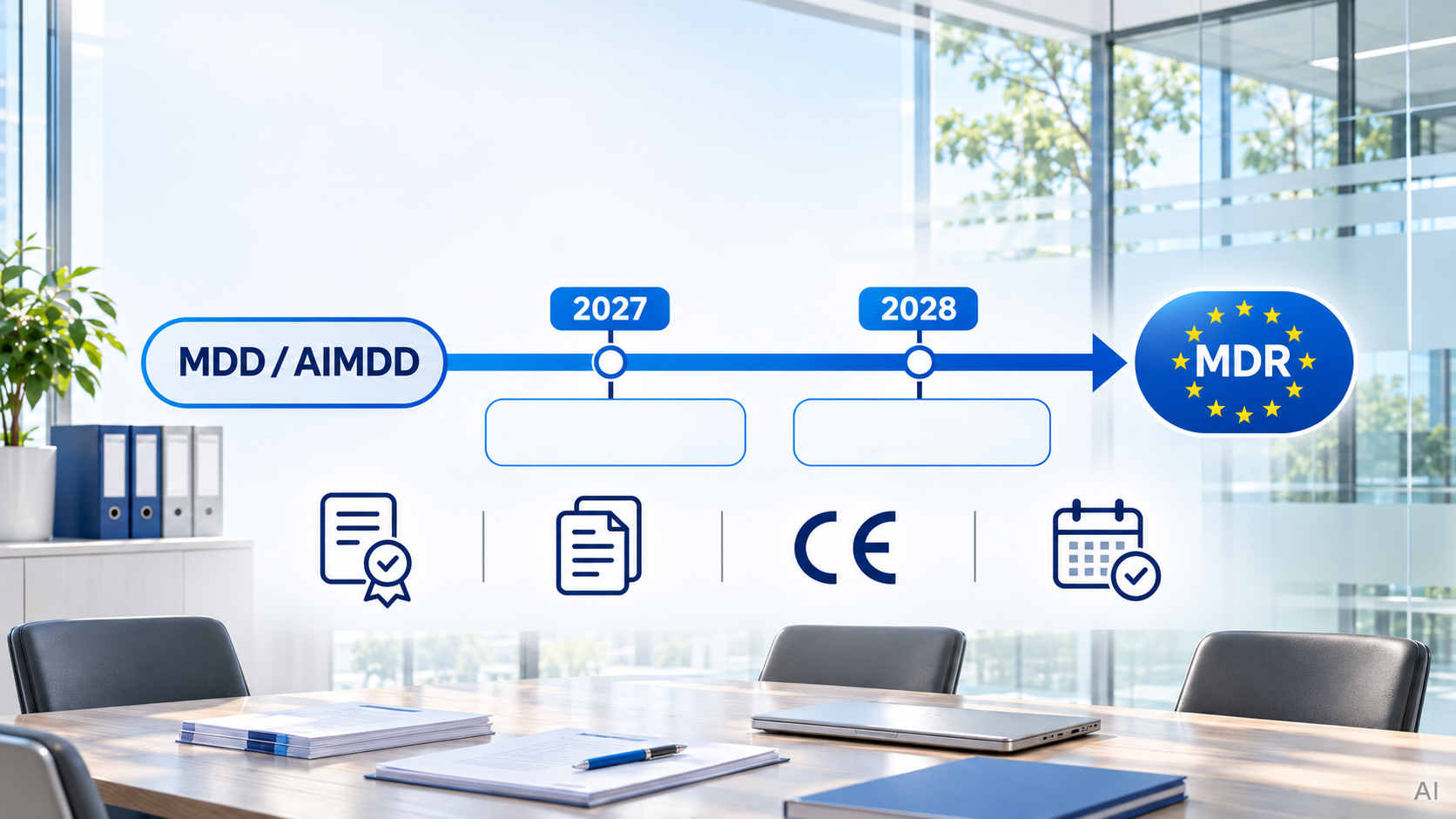
Certain devices complying with the MDD or AIMDD can use conditional transitional periods until the end of 2027 or 2028. We explain which devices qualify and what evidence manufacturers should already hold.
 Quality management
Medical device manufacturer obligations: from design to post-market surveillance
Manufacturers remain responsible for device conformity after sales begin. We explain MDR obligations, how to assign them across the organization, and the rules for documentation, incidents and continuity of supply.
 Quality management
ISO 13485: how does standardization support medical device safety?
ISO 13485 structures quality management for organizations involved in the medical device life cycle. Its contribution to safety comes from controlling processes, competence and changes that can affect the device.
 Quality management
What is MDR and what does it require of medical device manufacturers?
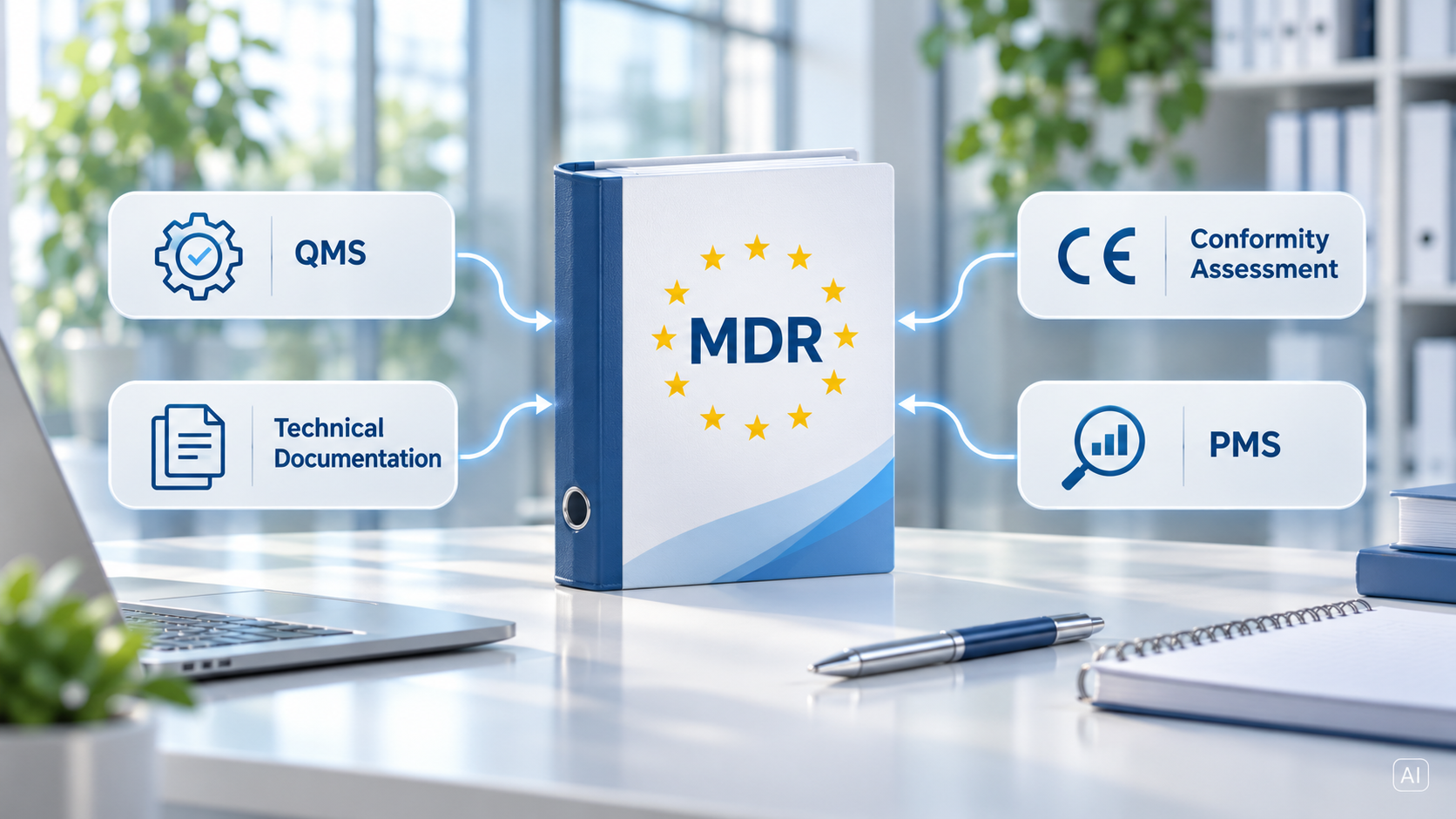
MDR sets the rules for placing medical devices on the European Union market and monitoring them. We explain manufacturers’ obligations and what they mean for design, production and work after sales begin.