What is MDR and what does it require of medical device manufacturers?
MDR sets the rules for placing medical devices on the European Union market and monitoring them. We explain manufacturers’ obligations and what they mean for design, production and work after sales begin.

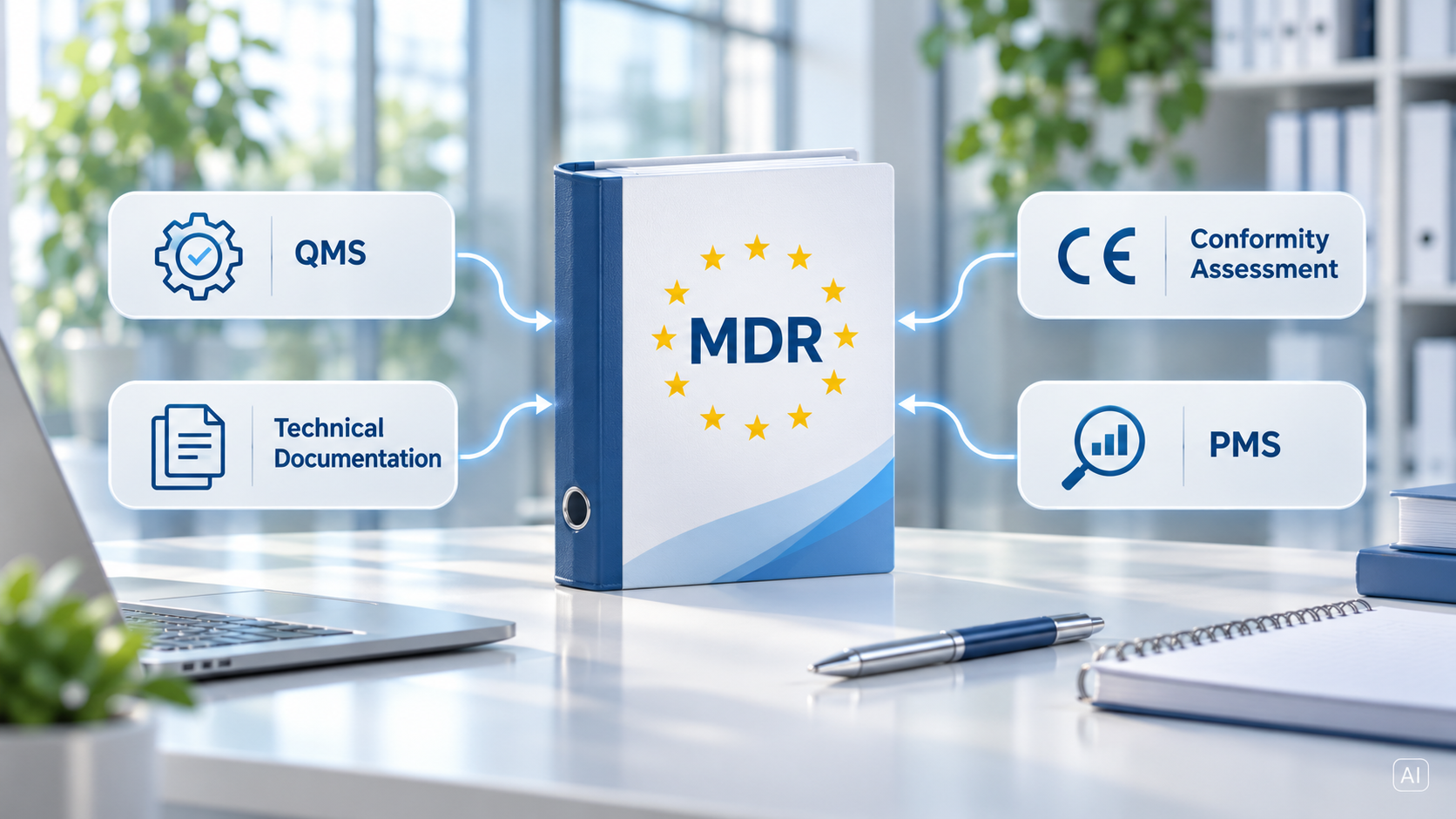
Key Takeaways
- MDR is Regulation (EU) 2017/745, which has generally applied since May 26, 2021.
- The manufacturer is responsible for device compliance throughout its life cycle, including when other companies carry out design or manufacturing.
- The involvement of a notified body depends on the device and the applicable conformity assessment procedure.
- The quality management system, technical documentation, risk management and clinical evaluation must remain consistent.
- ISO 13485 certification does not replace conformity assessment under MDR.
In this article
- What is MDR?
- Which products does the Regulation cover?
- What does MDR require of manufacturers?
- Compliant design and controlled production
- Quality management system
- Technical documentation and clinical data
- Conformity assessment and CE marking
- What changes after sales begin?
- MDR, ISO 13485 and MDCG guidance: how do they differ?
- What does this mean in practice?
- Hypothetical example: a new material supplier
- Where is consistency most easily lost?
- How does Neximed help organize the work?
- Where should a readiness review begin?
- Sources & references
- Frequently Asked Questions (FAQ)
What is MDR?
MDR, short for Medical Devices Regulation, is Regulation (EU) 2017/745 of the European Parliament and of the Council on medical devices. It replaced Directive 93/42/EEC, known as MDD, and Directive 90/385/EEC on active implantable medical devices, or AIMDD. MDR has generally applied since May 26, 2021. Certain devices are covered by conditional transitional provisions. 1 2
MDR is directly applicable EU law. Calling it a set of "guidelines" blurs the distinction between a legal obligation and a document that helps interpret that obligation. Guidance from the Medical Device Coordination Group, or MDCG, is an example of the latter. These documents are not legally binding. 3
The Regulation governs the placing on the market, making available on the market and putting into service of devices within its scope. It also covers their clinical investigations. The first task is to determine whether the particular product falls under MDR.
Which products does the Regulation cover?
Whether a product qualifies as a medical device depends, among other things, on the intended purpose specified by its manufacturer and its principal mode of action. A device may be an instrument, apparatus, implant, material or software intended for specific medical purposes. Article 2(1) MDR provides the definition. 1
A product’s presence in a hospital is not enough to make it a medical device. For example, software used to organize work needs a different analysis from software that provides information used in diagnostic decisions. The manufacturer should determine the product’s function and the scope of its claims before selecting a regulatory route. 1 4
Two separate acts must also be distinguished:
- MDR 2017/745 covers medical devices and accessories within its scope, as well as certain groups of products without an intended medical purpose listed in Annex XVI.
- IVDR 2017/746 is a separate regulation on in vitro diagnostic medical devices.
The transitional deadlines and classification rules of the two regulations are not interchangeable. 2
What does MDR require of manufacturers?
Article 10 MDR brings together the general obligations of manufacturers. Other provisions and annexes expand on them for individual areas. For an organization, these obligations create several related streams of work. 1
Compliant design and controlled production
The manufacturer must ensure that the device is designed and manufactured in accordance with MDR. It should identify the applicable general safety and performance requirements in Annex I and gather evidence that they have been met. The evidence needed depends on the device’s characteristics and intended purpose. 1
The design team needs agreed requirements, production needs the current specification, and quality needs criteria for accepting and releasing the device. When a material or process changes, the company assesses the impact on these arrangements and records the basis for its decision. This is one way to organize the work needed to meet the requirements.
Quality management system
Article 10(9) requires manufacturers of devices other than investigational devices to establish and maintain a quality management system, or QMS. The system must ensure compliance with the Regulation in a manner proportionate to the risk class and type of device. 1
Its scope includes management responsibility, resources, control of suppliers, product realization, risk management, clinical evaluation, post-market surveillance, and corrective and preventive action. Implementing MDR therefore also involves purchasing, production and senior management. Quality assurance and regulatory affairs teams, known as QA and RA, cannot produce all the necessary records on their own.
Technical documentation and clinical data
For devices other than custom-made devices, the manufacturer prepares and updates technical documentation in accordance with Annexes II and III. The documentation must allow the conformity of the device to be assessed. It includes the device description, design and manufacturing information, risk analysis, and verification and validation evidence. 1
Clinical evaluation is the systematic collection and assessment of data to confirm the device’s safety and performance. The obligation to carry it out does not mean that every device needs a new clinical investigation involving human subjects. How to obtain sufficient evidence must be determined for the individual case, in accordance with Article 61 and Annex XIV. 1 4
Conformity assessment and CE marking
The manufacturer selects the conformity assessment procedure appropriate to the device. Depending on the class and particular characteristics, a notified body may need to be involved. This is a body designated to assess conformity. Under the usual route for class I devices, excluding sterile devices, devices with a measuring function and reusable surgical instruments, the manufacturer carries out the assessment without a notified body. 4
Once conformity has been demonstrated, the manufacturer draws up an EU declaration of conformity and affixes the CE marking. Custom-made devices and investigational devices follow separate rules. The claim that "every device needs a CE certificate from a notified body" is therefore imprecise. 1 4
What changes after sales begin?
The manufacturer carries out post-market surveillance, or PMS. This involves actively and systematically collecting and analyzing experience with the device. The findings inform risk assessment, clinical evaluation and decisions on corrective action, among other activities. 1 4
PMS covers more information than complaints alone. The manufacturer must separately provide for the assessment and reporting of serious incidents and field safety corrective actions. The complaints procedure should allow staff to identify quickly whether an incoming report needs this escalation. 5
MDR also provides for device identification and traceability. The Unique Device Identification system, or UDI, and registration in EUDAMED apply where relevant. The first four modules of the database have been mandatory since May 28, 2026. Registration of existing devices has its own transitional provisions, so the date when the obligation begins should not be treated as a single deadline for the entire portfolio. 6
MDR, ISO 13485 and MDCG guidance: how do they differ?
Each source has a different role:
- MDR sets the manufacturer’s legal obligations.
- ISO 13485 sets requirements for a quality management system in the medical device sector. ISO itself does not require organizations to be certified to the standard.
- An applicable European harmonised standard may provide a presumption of conformity with the MDR requirements that it covers. That presumption has a limited scope.
- MDCG documents help interpret and apply the legislation, but do not replace it. 1 3 7 8
An ISO 13485 certificate covers a management system within a defined scope. The manufacturer must still demonstrate the conformity of the particular device, including providing the appropriate technical and clinical evidence.
What does this mean in practice?
Implementation work can be organized by assigning a process owner and evidence of completion to each requirement. MDR does not prescribe a single template for this map.
A practical review of MDR requirements
- 01Purpose and qualification
Define the intended purpose and determine whether the product qualifies as a medical device.
- 02Class and procedure
Justify the risk class and select the conformity assessment procedure.
- 03Requirements and evidence
Map the applicable requirements to tests, documents and processes.
- 04Current device version
Check that the evidence covers the current version of the device.
- 05Release and registration
Prepare device release, the required marking and registrations.
- 06Data after sales
Plan how to collect data after sales begin and respond to new information.
Hypothetical example: a new material supplier
Practical example
- Situation
A manufacturer plans to change the supplier of a material that comes into contact with the patient.
- Problem
Purchasing receives a better offer, but the existing safety evidence relates to the previous specification.
- Approach
Before implementing the change, the company assesses its impact on the device, risk, documentation and the need for additional testing. If the device benefits from transitional provisions, it separately considers whether the change is significant within the meaning of Article 120.
- Takeaway
Once the assessment is complete, the company decides on the new purchasing and production conditions. This scenario illustrates one possible workflow; whether the change is permissible depends on the assessment.
Where is consistency most easily lost?
The risk of error increases when teams work with different versions of the device description. Technical documentation may cover a previous configuration, sales materials may claim a broader intended purpose, and the production procedure may already specify a new component.
During a review, select one change and trace its history: the decision, impact assessment, evidence, approval and training of the people doing the work. This can expose gaps that a list of existing procedures will not reveal.
How does Neximed help organize the work?
Neximed is an eQMS and eDMS platform dedicated to medical device manufacturers working with MDR and ISO 13485. In the areas discussed here, available modules include Training, with training records and effectiveness assessment, and CAPA, which guides action from root cause analysis through to effectiveness assessment.
The manufacturer remains responsible for device qualification, interpretation of the requirements and the decision on conformity.
Discuss how to organize your quality processes
A conversation about quality processes can help define the scope of support.
Where should a readiness review begin?
Questions for a readiness review
- Is the intended purpose consistent across the documentation, instructions for use and sales materials?
- Does the company have a justification for the device classification?
- Has the appropriate conformity assessment procedure been selected?
- Does the technical and clinical evidence cover the current version of the product?
- Does the QMS cover the obligations in Article 10(9) MDR?
- Do employees know whom to inform about a potential serious incident?
- Have the applicable UDI and registration obligations been determined?
- Has the device’s status during the transitional period been documented separately?
Verified on October 15, 2026. Educational material concerning the EU market. Assessment of a particular device requires consideration of its intended purpose, documentation and the applicable legislation.
Sources & references
- 01
- 02
- 03
- 04
- 05
- 06
- 07
- 08
This article is for information only and does not replace an individual regulatory or legal analysis. Always check the current text of the regulations, the relevant guidance and the specifics of your device.
Frequently Asked Questions (FAQ)
Does MDR apply only to manufacturers based in the EU?
Can a small company dispense with a quality management system?
Is ISO 13485 certification enough to place a device on the market?
Does every device need a new clinical investigation?
Does the transitional period allow a new project to start under MDD?
The NexiMed team working on quality management systems and regulatory compliance for medical device manufacturers.
See also
 Quality management
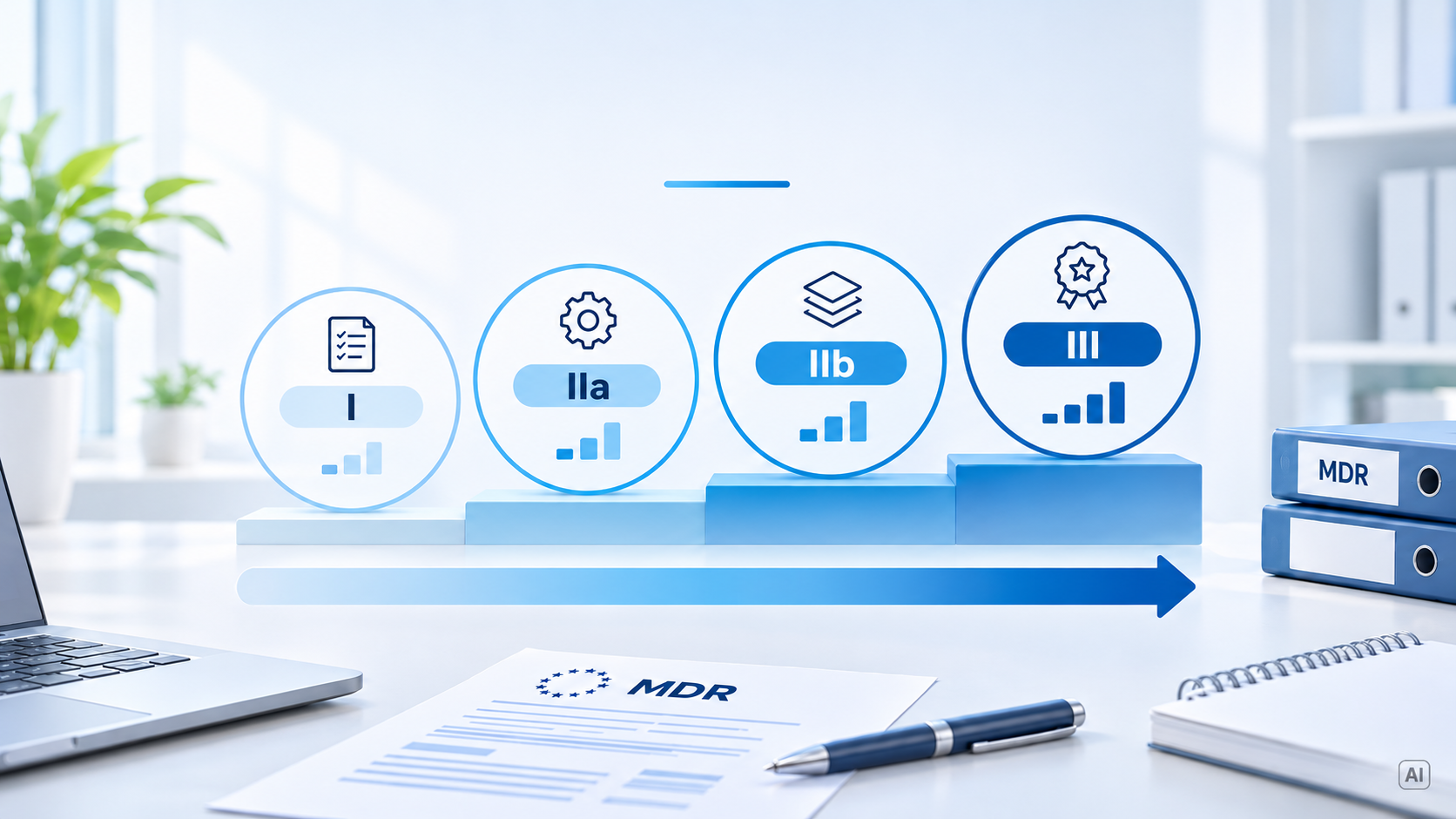
Medical device classification: what is it and why is it used?
A device’s class affects conformity assessment and some obligations after sales begin. We explain how to determine it under the MDR and why a similar appearance does not mean that two products belong to the same class.
 Quality management
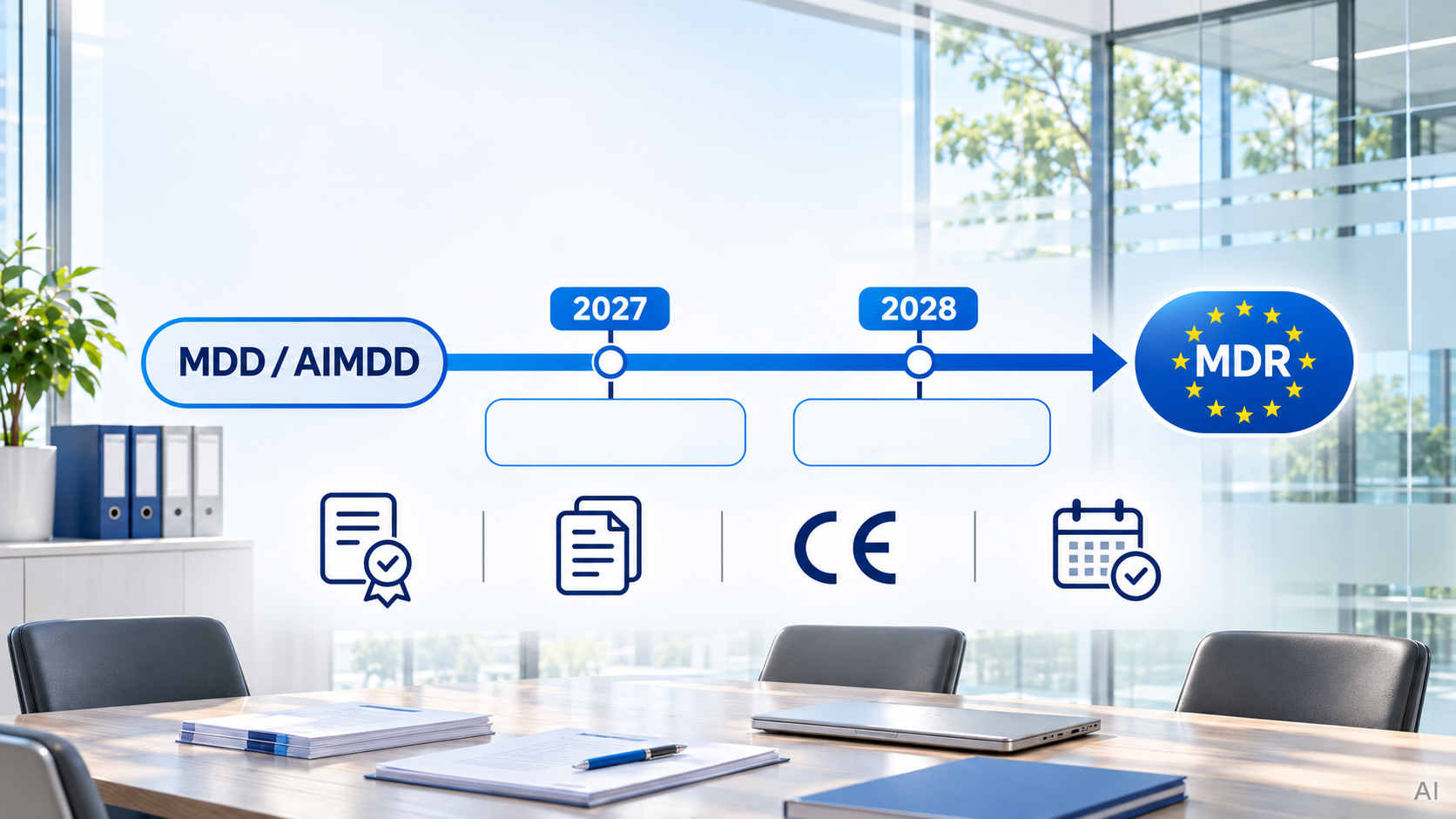
Transitional periods: how does the move from MDD to MDR work?
Certain devices complying with the MDD or AIMDD can use conditional transitional periods until the end of 2027 or 2028. We explain which devices qualify and what evidence manufacturers should already hold.
 Quality management
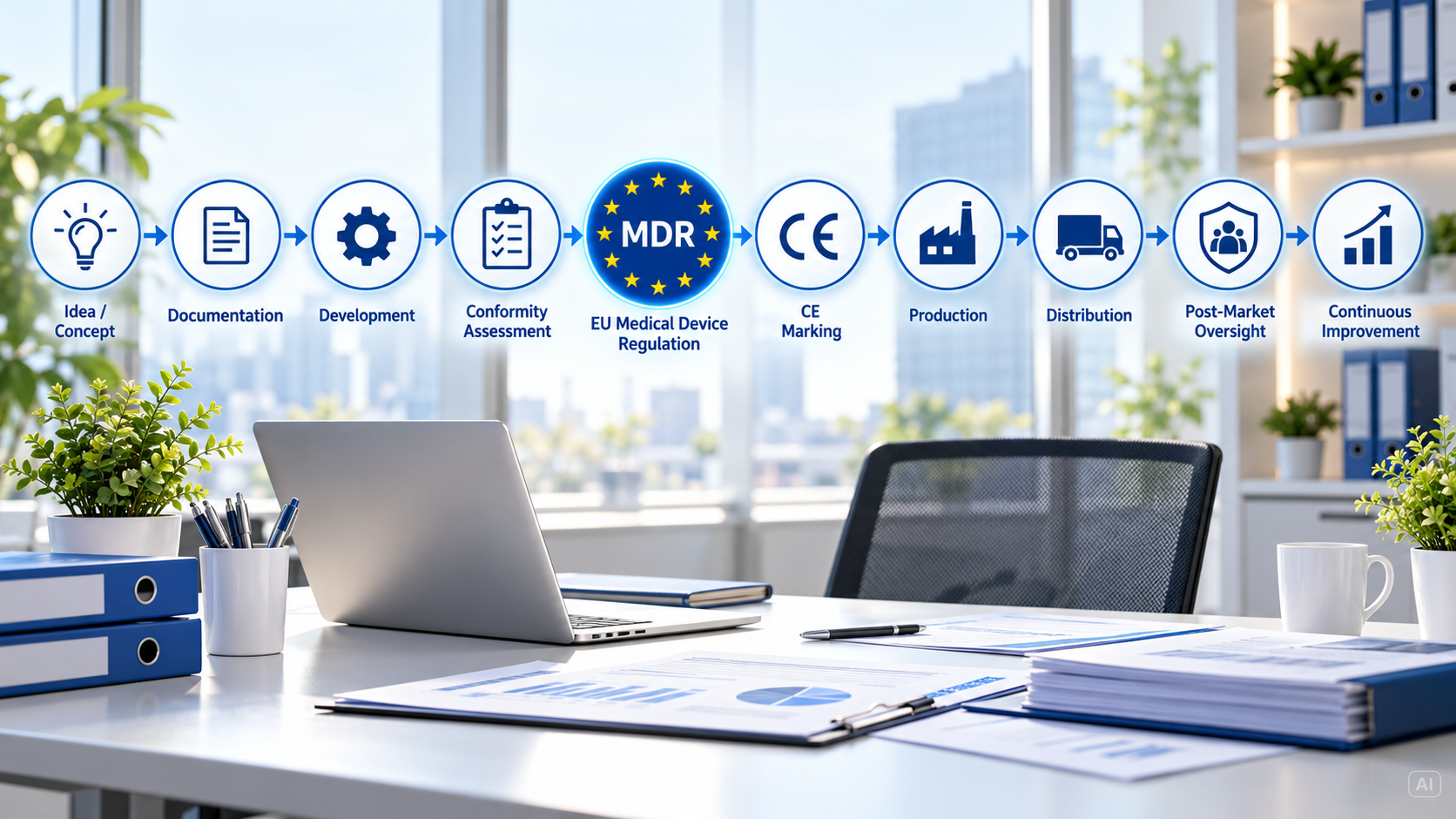
Medical device manufacturer obligations: from design to post-market surveillance
Manufacturers remain responsible for device conformity after sales begin. We explain MDR obligations, how to assign them across the organization, and the rules for documentation, incidents and continuity of supply.
 Quality management
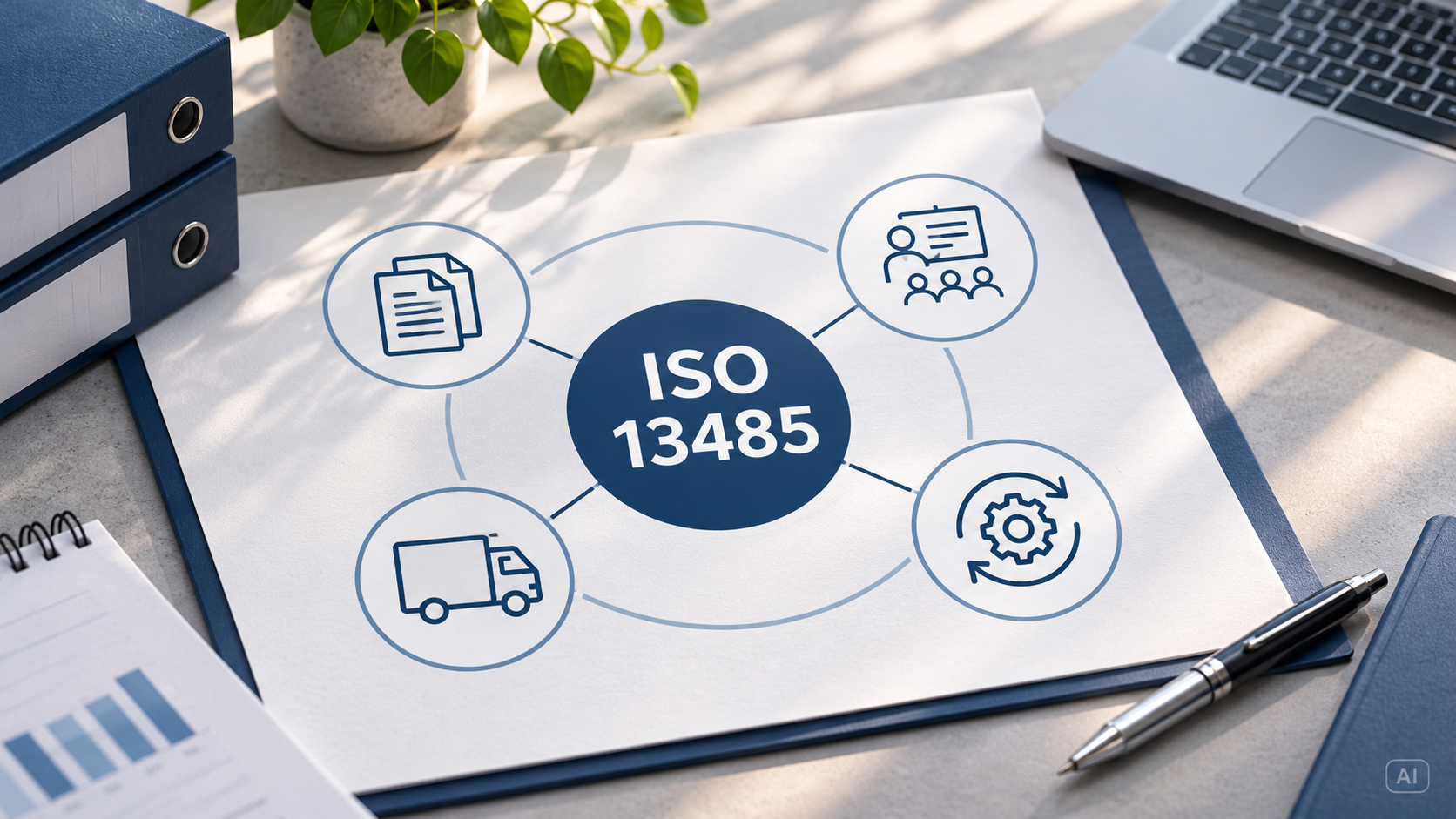
ISO 13485: how does standardization support medical device safety?
ISO 13485 structures quality management for organizations involved in the medical device life cycle. Its contribution to safety comes from controlling processes, competence and changes that can affect the device.